
By Dr. Belinda Gregory-Head, Dentist at Dental Implant Partners, San Francisco
Restorative dental care is far more nuanced than simply “fixing” teeth. In my practice at Dental Implant Partners in San Francisco, I approach restorative dentistry as a complex integration of biomechanics, biology, materials science, and patient-centered treatment planning. True restorative excellence requires understanding the functional harmony of the entire stomatognathic system, not just individual teeth. Below, I outline eleven essential considerations that patients and colleagues alike should understand about modern restorative dental care.

1. Restorative Dentistry Is Rooted in Comprehensive Diagnosis
Restorative dentistry begins long before a crown is prepared or an implant is placed. Every successful case starts with an exhaustive diagnostic process that includes periodontal charting, occlusal analysis, radiographic interpretation, and often three-dimensional imaging. I evaluate structural integrity, pulpal vitality, bone levels, parafunctional habits, and the patient’s risk profile for caries and periodontal disease. Without this foundation, treatment becomes reactive rather than strategic. Comprehensive diagnosis ensures that restorative interventions address root causes rather than merely symptoms.
Occlusion plays a particularly critical role in my diagnostic workflow. Improper occlusal schemes can accelerate restorative failure through excessive lateral forces or unbalanced load distribution. I routinely assess centric relation, anterior guidance, envelope of function, and wear patterns before planning definitive restorations. Digital articulation and mounted study models are often used when complex reconstruction is indicated. These analyses prevent catastrophic failures such as porcelain fracture, screw loosening, or marginal breakdown.
Equally important is understanding the patient’s systemic health and behavioral factors. Conditions such as diabetes, osteoporosis, GERD, and xerostomia significantly affect restorative outcomes. Bruxism, stress-related clenching, and dietary habits alter prognosis and material selection. A restorative plan that ignores systemic and behavioral components is incomplete. Dentistry does not occur in isolation from the rest of the body, and my responsibility is to treat the patient holistically.
2. Structural Integrity Determines the Type of Restoration
The amount of remaining tooth structure dramatically influences restorative decisions. Teeth that have undergone extensive decay, endodontic therapy, or fracture often require cuspal coverage to prevent structural failure. When internal dentin support is compromised, a simple filling may be biomechanically insufficient. In such cases, indirect restorations such as onlays or crowns provide reinforcement and redistribute occlusal forces more effectively. Preservation of tooth structure, however, remains a guiding principle.
Adhesive dentistry has significantly altered how we approach structural reinforcement. Modern bonding protocols allow for more conservative preparations compared to traditional full-coverage crowns. When enamel margins are preserved, bond strength is maximized and microleakage is minimized. However, bonding to dentin requires meticulous isolation and protocol adherence to ensure longevity. Moisture control and proper substrate preparation are non-negotiable.
When structural compromise is severe, post-and-core foundations or full-coverage restorations become necessary. In these cases, ferrule design is critical to prevent vertical root fracture. The presence of at least 1.5–2 millimeters of circumferential tooth structure above the margin greatly improves prognosis. Restoration design must align with biomechanical principles, not just cosmetic demands. Structural respect is the cornerstone of durable dentistry.
3. Materials Matter More Than Patients Realize
Restorative materials are not interchangeable, and their selection requires careful consideration of function, esthetics, and biomechanical load. In posterior load-bearing areas, high-strength ceramics such as zirconia may be preferred due to their fracture resistance. However, zirconia’s rigidity also necessitates careful occlusal adjustment to prevent stress transfer to adjacent structures. Lithium disilicate offers superior esthetics and translucency, making it ideal for anterior restorations where light transmission is critical. Material choice directly influences long-term success.
Bonded composite restorations offer versatility and conservative preparation, but they are highly technique-sensitive. Polymerization shrinkage, marginal adaptation, and layering technique all affect performance. Bulk-fill composites have simplified certain workflows, yet they still require proper curing protocols and incremental stress management. Composite is not inferior; it is simply dependent on operator precision. Longevity correlates with technique, not just product.
Cementation protocols also vary depending on material. Resin-modified glass ionomer cements may be appropriate in certain situations, while adhesive resin cements are mandatory for others. Surface treatment, such as sandblasting, silanization, or priming, can significantly alter bond strength. I evaluate each case individually rather than defaulting to a single material system. Precision in material science is fundamental to restorative predictability.
4. Dental Implants Are a Restorative Solution, Not Just a Surgical One
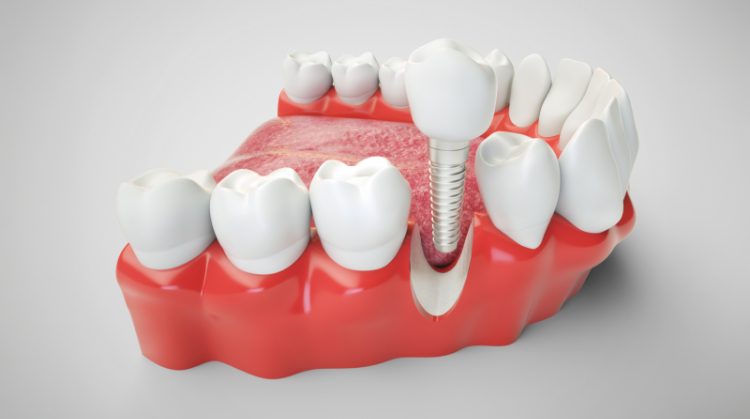
At Dental Implant Partners, implant therapy is deeply integrated into restorative planning. Implant placement is not simply about replacing a missing tooth; it is about restoring biomechanical equilibrium and preserving bone architecture. Proper implant positioning requires prosthetically driven planning, often guided by CBCT imaging and digital surgical guides. The restorative end result dictates implant angulation, depth, and platform selection. Surgery and prosthetics must function as a unified discipline.
Implant restorations differ significantly from natural teeth in their load distribution. Unlike teeth, implants lack a periodontal ligament and therefore do not absorb shock in the same way. This absence of proprioception requires careful occlusal design to avoid overload. I design implant crowns with adjusted contact points and controlled occlusion to reduce lateral stress. Failure to do so can lead to screw loosening, peri-implantitis, or prosthetic fracture.
Long-term implant success also depends on soft tissue management and maintenance. Emergence profile, contour, and hygiene accessibility must be meticulously engineered. Patients require ongoing monitoring of peri-implant tissues and bone levels. Implant dentistry is not a one-time intervention but a lifelong partnership between clinician and patient. Success lies in both surgical precision and restorative foresight.
5. Occlusion Is the Silent Determinant of Longevity
Occlusal harmony determines whether restorations survive or fail prematurely. Excessive lateral forces and parafunctional habits generate stress concentrations that can fracture ceramics or debond restorations. I carefully adjust occlusion following restorative placement to ensure balanced force distribution. Even subtle discrepancies can lead to long-term complications. Precision occlusion is an art informed by biomechanics.
In full-mouth rehabilitations, occlusal scheme design becomes even more critical. Decisions between mutually protected occlusion and group function are case-dependent. I analyze muscle function, temporomandibular joint health, and wear patterns before determining the optimal scheme. These are not cosmetic decisions but functional ones. Restoration without occlusal strategy is incomplete.
Night guards are frequently recommended for patients with bruxism. Even perfectly designed restorations can fail under chronic clenching forces. Protective appliances help preserve both natural dentition and prosthetic work. Prevention is always preferable to repair. Occlusal awareness extends the lifespan of restorative dentistry significantly.

6. Periodontal Health Directly Impacts Restorative Outcomes
No restoration can succeed in the presence of uncontrolled periodontal disease. Inflammation compromises soft tissue stability and bone support, which directly affects margins and long-term retention. I ensure periodontal health is optimized before definitive restorative work begins. Scaling, root planing, or surgical intervention may be required. Stability must precede restoration.
Biologic width considerations are fundamental during restorative margin placement. Violating the supracrestal tissue attachment leads to chronic inflammation and recession. I carefully design margins to respect periodontal anatomy. Sometimes crown lengthening is necessary to establish proper restorative space. Biology dictates success.
Maintenance is equally critical post-restoration. Regular hygiene visits allow for monitoring of gingival health and margin integrity. Patients are educated on home care specific to their restorations. Healthy tissues protect restorative investment. Periodontal health is inseparable from restorative longevity.
7. Digital Dentistry Has Transformed Precision
Digital scanning and CAD/CAM technology have dramatically improved restorative accuracy. Intraoral scanners eliminate many inaccuracies associated with traditional impressions. Digital workflows allow for real-time margin evaluation and occlusal analysis. Precision reduces remakes and improves patient comfort. Technology enhances, but does not replace, clinical judgment.
CAD/CAM fabrication enables highly precise restorations with consistent material properties. Milling and sintering processes produce restorations with controlled strength profiles. Digital design also allows for predictable contouring and contact formation. Laboratory communication becomes more streamlined. Accuracy translates into longevity.
Despite technological advancements, clinical skill remains paramount. Digital tools are only as effective as the clinician using them. Proper preparation design and tissue management remain essential. Technology refines execution but does not substitute expertise. True mastery lies in integrating digital precision with biological understanding.
8. Restorative Dentistry Requires Long-Term Planning
Every restoration should be planned with the future in mind. Teeth adjacent to large restorations may require monitoring for structural compromise. I consider how current treatment will impact future options. Dentistry is cumulative; decisions today influence possibilities tomorrow. Strategic sequencing prevents unnecessary retreatment.
Endodontically treated teeth, for example, may require cuspal coverage to prevent fracture years later. Similarly, implant site development may necessitate bone grafting in anticipation of future needs. Long-term planning often involves interdisciplinary coordination. Collaboration enhances outcomes.
Patients benefit from understanding restorative timelines and maintenance expectations. Dentistry is not static. Materials age, tissues change, and habits evolve. Proactive monitoring allows for intervention before catastrophic failure occurs. Longevity requires vigilance.
9. Esthetics Must Be Balanced with Function
While esthetics are important, they must never compromise structural or functional integrity. Anterior restorations demand careful shade matching, translucency layering, and contour refinement. However, these must align with phonetics and occlusal dynamics. Beauty without biomechanics is fragile.
Smile design often involves digital mock-ups and provisional restorations. These allow evaluation of lip support, incisal edge position, and gingival symmetry. Patient collaboration is essential during this phase. Functional evaluation accompanies esthetic refinement. The two cannot be separated.
True esthetic dentistry integrates anatomy, material science, and occlusal principles. Over-contouring for cosmetic effect can lead to inflammation. Undersized restorations may affect phonation. Balance is achieved through detailed analysis and patient-specific customization. Excellence lies in subtle precision.
10. Maintenance Is as Important as the Restoration Itself
Restorations require ongoing evaluation and maintenance. Margins must be monitored for recurrent decay or leakage. Occlusion can shift over time due to wear or tooth movement. Regular examinations ensure early detection of complications. Preventive care protects restorative investment.
Professional cleanings are tailored to the type of restorations present. Implant-supported restorations require specialized instruments to avoid surface damage. Composite restorations may benefit from periodic polishing to maintain surface integrity. Maintenance protocols are individualized. Standardized care is insufficient.
Patient compliance greatly influences restorative lifespan. Home hygiene practices, dietary habits, and appliance use all play roles. Education is a continuous process in my practice. Empowered patients preserve their own dental health more effectively. Partnership defines successful long-term outcomes.
11. Expertise and Experience Shape Predictable Outcomes
Restorative dentistry is a discipline that demands continuous education and refinement. Advances in materials, bonding protocols, and digital workflows evolve rapidly. I remain committed to advanced training and evidence-based practice. Mastery requires dedication to lifelong learning. Patients deserve the highest standard of care.
Complex cases often require interdisciplinary collaboration. Periodontists, oral surgeons, endodontists, and laboratory technicians contribute to comprehensive solutions. At Dental Implant Partners in San Francisco, teamwork enhances predictability. Coordinated care improves efficiency and patient experience. Dentistry thrives in collaboration.
Ultimately, restorative dental care is about restoring confidence, comfort, and function with scientific precision. Every treatment decision must balance biology, mechanics, and esthetics. As a dentist, I approach each case with analytical rigor and individualized strategy. Excellence is not accidental; it is deliberate and methodical. Restorative dentistry, when performed thoughtfully, transforms both smiles and quality of life.
Final Thoughts
Restorative dental care is a highly technical discipline that extends far beyond repairing damaged teeth. True success depends on comprehensive diagnosis, precise material selection, occlusal harmony, and respect for biological principles. When each of these factors is carefully integrated, restorations can perform predictably and withstand functional demands for many years. Longevity is never accidental it is the result of deliberate planning, meticulous execution, and an understanding of the complex biomechanics of the oral system.
Equally important is the partnership between clinician and patient in maintaining long-term results. Even the most advanced restorative work requires ongoing monitoring, proper hygiene, and management of risk factors such as bruxism or periodontal disease. Restorative dentistry, when approached strategically and conservatively, not only rebuilds teeth but restores stability, function, and confidence. With expertise and careful stewardship, it becomes a transformative investment in overall oral health.
About Dental Implant Partners
At Dental Implant Partners, restorative dentistry is not simply a service we provide, it is the foundation of our practice. I founded this prosthetic practice more than 25 years ago with a commitment to delivering highly precise, ethically grounded, and biologically sound restorative care. Today, our team has grown to include experienced prosthodontists and general dentists who share a deep dedication to exceptional patient outcomes. Our hygienists are uniquely trained as dentists and have been with us for many years, forming trusted and lasting relationships with the patients we serve. Together, we provide comprehensive restorative solutions ranging from conservative fillings and veneers to full dental rehabilitations supported by dental implants.
We also understand that implants are not the right solution for every patient. For those individuals, we are highly experienced in designing and fabricating dentures that restore comfort, stability, and confidence. Every treatment plan we create is rooted in careful diagnosis, long-term strategy, and a commitment to excellence in both function and esthetics. Our practice overlooks the San Francisco Bay, providing a beautiful and welcoming environment where patients feel respected and cared for. If you are considering restorative dental treatment and want thoughtful, expert guidance, we would be honored to help you restore your smile and your oral health. Contact Dental Implant Partners to schedule a consultation and begin your path toward lasting, confident function.